
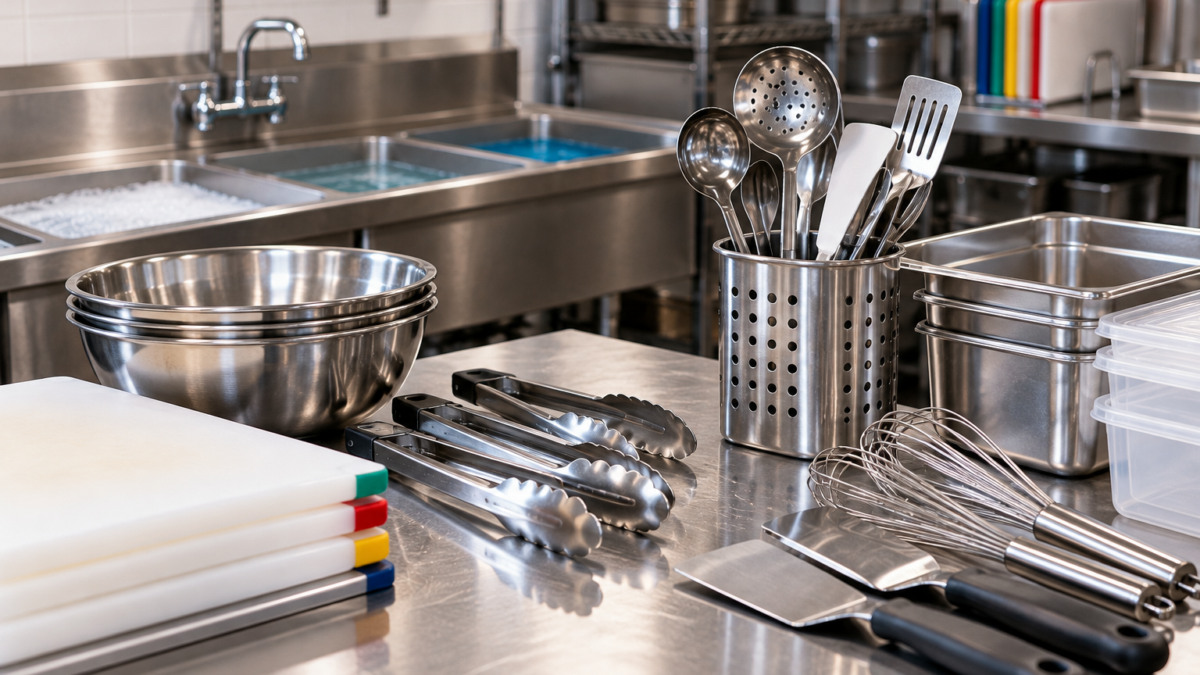
In a busy commercial kitchen, reusable foodservice tools are constantly moving between food preparation, cooking, serving, and cleaning tasks. Tongs, spatulas, cutting boards, measuring utensils, and other equipment need proper care between uses to help prevent cross-contamination and maintain food safety.
Keeping these tools ready for the next shift requires more than a quick rinse. A consistent routine that includes cleaning, rinsing, sanitizing, drying, and proper storage helps ensure equipment is ready when the kitchen needs it.
Why Proper Care of Reusable Foodservice Tools Matters
Reusable foodservice tools can collect food residue, grease, moisture, and microorganisms during normal operations. If these items are not cleaned and sanitized correctly, they may contribute to cross-contamination between raw ingredients, cooked foods, and ready-to-eat products.
Proper care also helps maintain equipment condition. Food buildup and grease can become harder to remove over time, while inappropriate cleaning products or abrasive tools may damage certain surfaces.
Establishing a routine for handling reusable equipment helps kitchen teams maintain consistent sanitation practices, reduce avoidable contamination risks, and keep essential tools organized throughout each shift.
1. Remove Food Debris Immediately
Start by removing leftover food from reusable tools as soon as practical after use. Scrape off food particles and dispose of waste in the appropriate container before placing the tools in the washing area.
Avoid allowing food residue, sauces, grease, or other materials to dry on utensils and equipment. Dried-on debris can be more difficult to remove and may require additional cleaning.
Keep used tools separate from clean equipment. Designated containers or clearly defined areas can help prevent dirty utensils from coming into contact with sanitized items.
2. Wash Tools Thoroughly
Washing removes visible food debris, grease, and other soil from reusable equipment. Use the appropriate detergent, water temperature, and cleaning method for the tool and its material.
Pay attention to areas that are easily overlooked, including handles, joints, grooves, seams, and textured surfaces. These areas can collect food residue even when the main surface appears clean.
For tools with removable parts, disassemble them when the manufacturer’s instructions permit it so each component can be cleaned properly. Always follow the equipment manufacturer’s care instructions to avoid damage.
Replace wash water when it becomes excessively dirty or greasy. Clean washing equipment and fresh detergent solution help support effective cleaning.
3. Rinse Away Detergent and Residue
After washing, rinse reusable tools thoroughly with clean water to remove detergent and loosened debris.
This step is important because remaining food residue or detergent may interfere with some sanitizing products. Check that all surfaces have been rinsed, including handles and other hard-to-reach areas.
In a three-compartment sink, the usual sequence is wash, rinse, and sanitize. Keep each compartment dedicated to its intended purpose to help maintain an organized workflow.
4. Sanitize Food-Contact Tools Properly
Cleaning and sanitizing serve different purposes. Cleaning removes visible soil, while sanitizing reduces microorganisms on properly cleaned surfaces when the sanitizer is used according to its directions.
Use a sanitizer approved for the intended food-contact application. Prepare the solution according to the product label, including the specified dilution, water temperature, and contact time.
Steramine Sanitizing Tablets can be incorporated into a foodservice sanitation routine when used in accordance with their current product label. Follow the directions for preparing the solution and use compatible test strips to verify the required sanitizer concentration.
Recommended products
-

Steramine QUAT QT-10 Solutions Test Strips – 150 Strips
$23.50 -
Steramine QUAT QT-10 Solutions Test Strips – 30 Strips
$11.50 -
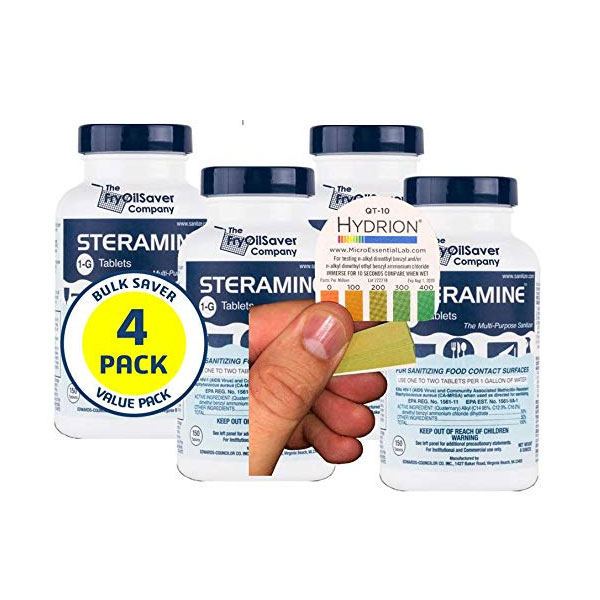
Steramine Sanitizer & QT-10 Test Strips Bundle – 4 Bottles & 30 Strips
$52.90 -

Steramine Sanitizer Tablets – Single Bottle with Test Strips
$13.50 -

Steramine Sanitizer Tablets – 72 Pack
$642.00 -

Steramine Sanitizer Tablets – 2 Pack with Test Strips
$27.90 -

Steramine Sanitizer Tablets – 6 Pack with Test Strips
$55.00 -

Steramine Sanitizer Tablets – 4 Pack with Test Strips
$49.95 -

FryOilSaver Chlorine Sanitizer Test Strips – 1 Vial of 100 Strips
$8.90
Ensure reusable tools are exposed to the sanitizing solution for the full required contact time. Do not assume a solution is effective based on its appearance alone, and replace it according to the product instructions and your establishment’s procedures.
Sanitize only after tools have been properly cleaned and rinsed. Applying sanitizer to visibly dirty equipment may prevent the process from working as intended.
5. Allow Tools to Air-Dry
Once sanitizing is complete, place reusable tools on a clean rack or designated draining area and allow them to air-dry.
Avoid wiping sanitized tools with reusable towels, as towels can transfer contaminants back onto clean surfaces. Make sure items are positioned so water can drain and air can circulate around them.
Follow the equipment and sanitizer instructions for any additional drying or handling requirements. Keep clean tools away from splash zones, dirty dishes, cleaning chemicals, and other potential sources of contamination.
6. Store Clean Tools in a Protected Area
Proper storage helps maintain sanitation after cleaning is complete. Store dry utensils and equipment in a clean, designated location where they are protected from dust, splashes, pests, and contact with contaminated surfaces.
Keep food-contact surfaces from touching dirty counters or the inside of unclean containers. Store knives, tongs, spatulas, and other frequently used tools in suitable holders or racks that can also be cleaned regularly.
Organizing tools by task can make it easier for employees to find what they need without handling multiple items unnecessarily. It also helps the next shift identify which equipment is clean and ready for use.
7. Inspect Tools Before the Next Shift
Before service begins, inspect reusable tools for cleanliness, damage, and signs of wear. Look for cracks, loose handles, chipped surfaces, rust, or other defects that may make equipment difficult to clean or unsuitable for use.
Damaged tools should be removed from service and assessed for repair or replacement. Cracked or heavily worn surfaces can create places where food residue accumulates and may make effective cleaning more difficult.
Check that the sanitation station is stocked with the necessary detergent, approved sanitizer, compatible test strips, and other supplies. A quick inspection helps staff identify problems before the kitchen becomes busy.
8. Make Sanitation Part of Every Shift Handover
A consistent handover routine helps ensure sanitation does not depend on individual habits or memory. Establish clear procedures for returning used tools, cleaning and sanitizing equipment, replacing solutions as required, and preparing the work area for the next team.
Train employees on the correct process and display simple instructions near washing and sanitizing stations. Supervisors can use a checklist to confirm that tools have been cleaned, sanitized, air-dried, and stored correctly.
During service, reusable tools should also be cleaned and sanitized between uses when required, particularly when switching between raw ingredients and ready-to-eat foods. Do not wait until the end of a shift to address potential cross-contamination.
Final Thoughts
Keeping reusable foodservice tools ready for the next shift starts with a consistent process: remove food debris, wash thoroughly, rinse, sanitize, air-dry, and store properly.
By training staff, inspecting equipment, and following the directions for approved sanitizing products such as Steramine Sanitizing Tablets, foodservice businesses can support more reliable sanitation practices throughout the workday.
Clean tools, proper sanitizing procedures, and organized storage help every shift start prepared.