
Maintaining proper sanitizer concentration is an important part of food safety in restaurants, commercial kitchens, bars, and other foodservice operations. A sanitizing solution that is too weak may not provide the intended sanitizing effect, while a solution that is too concentrated may fall outside the product’s specified use requirements.
Sanitizer test strips provide a simple way to check whether a solution is within its required concentration range. By making testing part of the daily sanitation routine, foodservice teams can monitor sanitizer strength and follow established food safety procedures more consistently.
Why Is Sanitizer Strength Important?
Sanitizers are designed to reduce microorganisms on properly cleaned food-contact surfaces when used according to their product instructions. Their effectiveness depends on several factors, including concentration, contact time, temperature, and the condition of the surface.
Simply preparing a sanitizing solution does not guarantee that it is at the correct strength. Incorrect dilution, repeated use, contamination, and other conditions can affect the solution.
Regular testing helps employees verify sanitizer concentration rather than relying on appearance or guesswork. It also supports consistent sanitation practices throughout a shift.
1. Identify the Type of Sanitizer
Before testing a solution, identify which sanitizer is being used. Common types in foodservice include quaternary ammonium compounds, often called Quat, and chlorine-based sanitizers.
Different sanitizers require different test strips. A strip designed for chlorine should not be used to measure Quat concentration, and vice versa, unless the product specifically indicates compatibility.
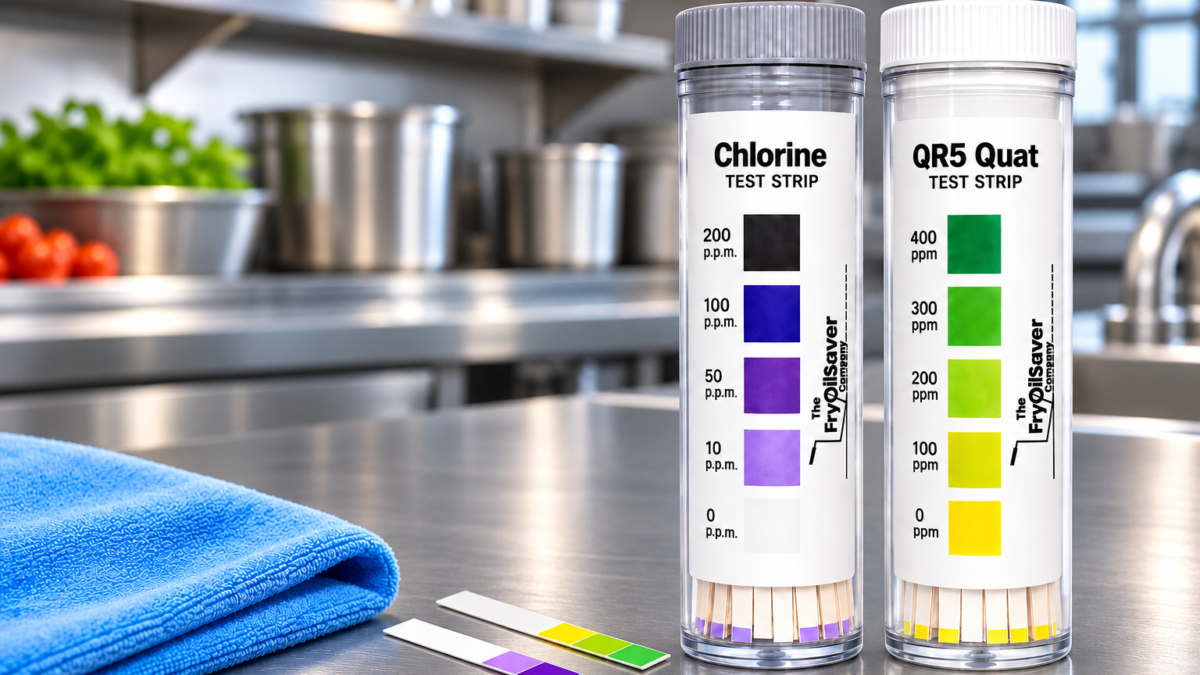
For example, the FryOilSaver Sanitizer Test Kit Combo includes two types of test strips:
- QR5 Quat sanitizer test strips for checking quaternary ammonium sanitizer concentration.
- Chlorine sanitizer test strips for checking chlorine sanitizer concentration.
The combo kit includes 100 strips of each type, along with color comparison charts to help users interpret the readings.
Always confirm that the selected strip matches the sanitizer being tested and that its measurement range is appropriate for the solution.
2. Prepare the Sanitizing Solution Correctly
Prepare the sanitizing solution according to the sanitizer manufacturer’s instructions. Follow the specified dilution, water temperature, and any other preparation requirements.
If using sanitizing tablets, measure the required amount of water and add the number of tablets directed by the product label. Allow the tablets to dissolve as instructed before testing the solution.
Products such as Steramine Sanitizing Tablets or Sterivibe can be incorporated into a commercial kitchen’s sanitation routine when used according to their current label directions.
Avoid estimating quantities or adding extra sanitizer without following the label. The goal is to prepare a solution within the specified concentration range, not simply to make it stronger.
3. Use the Correct Test Strip
Once the solution is prepared, select the appropriate test strip for the sanitizer type.
Follow the test strip manufacturer’s directions carefully. Depending on the product, these may specify how to expose the strip to the solution, how long to wait before reading it, and how to handle the strip.
Avoid touching the reactive testing area unnecessarily, as this may affect the test. Use a fresh strip for each test and do not reuse strips.
The FryOilSaver Sanitizer Test Kit Combo includes color comparison charts for both Quat and chlorine testing, helping staff compare the strip’s result with the appropriate scale.
4. Compare the Result With the Color Chart
After testing the solution, compare the strip’s color with the chart provided for that specific test strip.
Read the result within the time window stated in the manufacturer’s instructions. Waiting too long or reading the strip too early may lead to an inaccurate interpretation.
Check whether the measured concentration falls within the range specified by the sanitizer label and applicable food safety requirements. Do not assume that the highest reading is the best result.
The FryOilSaver combo kit is described as covering the following ranges:
| Test strip | Advertised measurement range |
| QR5 Quat sanitizer strips | 0–400 ppm |
| Chlorine sanitizer strips | 0–200 ppm |
5. Correct the Solution if the Reading Is Outside the Required Range
If the test result falls below or above the required concentration, do not assume the solution is ready for use.
Follow the sanitizer manufacturer’s instructions for correcting or replacing the solution. If additional sanitizer or water is permitted, make the adjustment as directed and test again before using the solution.
If the reading is unexpected, check whether the correct test strip was used, whether the strip is within its expiration date, and whether the test procedure was followed correctly.
Replace solutions when required by the product instructions or your establishment’s sanitation procedures. Record test results when required by your food safety plan.
6. Make Sanitizer Testing Part of the Daily Routine
Sanitizer testing should be incorporated into regular kitchen procedures rather than treated as an occasional task.
Train employees to identify sanitizer types, select compatible test strips, interpret results, and respond when readings fall outside the required range. Keep test strips accessible near the designated sanitation station, while storing them according to their packaging instructions.
Depending on your operation’s procedures and applicable requirements, testing may be needed when a solution is first prepared, during use, or whenever conditions suggest the concentration may have changed.
Consistent testing helps employees identify potential problems before relying on a solution that may not meet the required specifications.
Wrapping Up
Checking sanitizer strength is a straightforward but important step in maintaining foodservice sanitation. Using the correct test strips, following the manufacturer’s instructions, and verifying concentration against the required range can help kitchen teams maintain more consistent procedures.
The FryOilSaver Sanitizer Test Kit Combo, with separate QR5 Quat and chlorine test strips, provides a convenient option for operations that use both types of sanitizers.
Combined with proper cleaning, correct sanitizer preparation, and staff training, routine testing helps support a reliable sanitation process in busy commercial kitchens.
Remember: Always follow the sanitizer label, test strip instructions, and applicable food safety requirements. Correct concentration is only one part of effective sanitizing; required contact time and other product-specific conditions matter, too.