
A clean restaurant kitchen is essential for safe food preparation, efficient operations, and a positive customer experience. However, keeping a kitchen clean requires more than wiping down surfaces at the end of the day. A consistent daily sanitation routine helps restaurant teams stay on top of food contact surfaces, equipment, utensils, and high-touch areas throughout every shift.
By creating a clear sanitation schedule and making it part of everyday operations, restaurants can reduce the risk of cross-contamination and maintain a more consistent food safety environment.
Why Restaurants Need a Daily Sanitation Routine
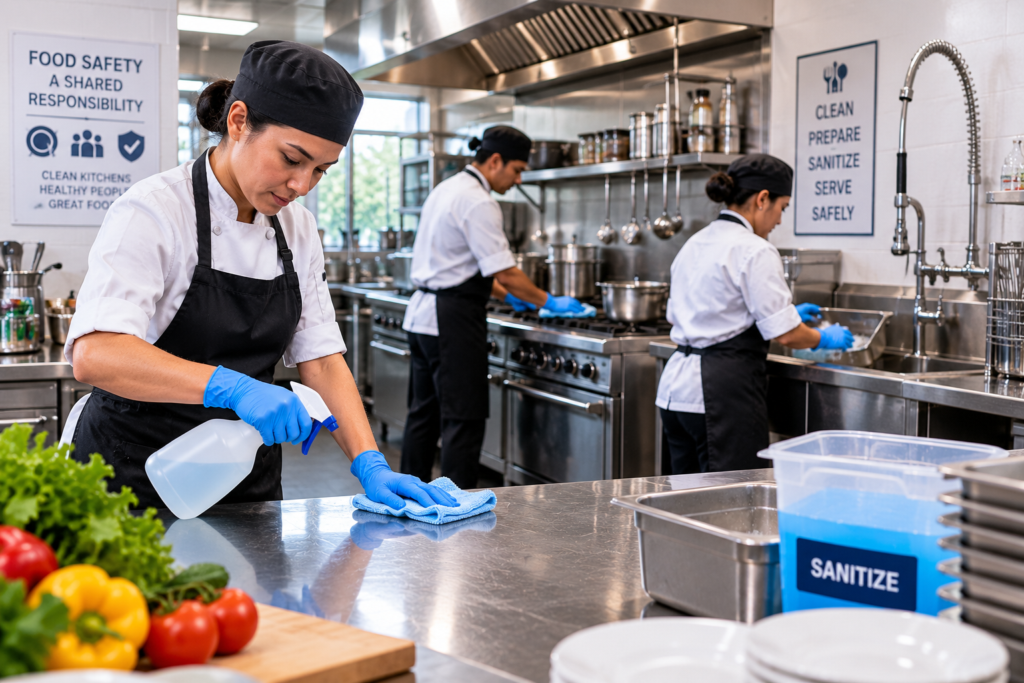
Restaurant kitchens are constantly exposed to food particles, grease, moisture, hands, utensils, and equipment. During a busy shift, surfaces that were clean at the beginning of the day can quickly become contaminated.
A daily sanitation routine gives employees clear expectations about what needs to be cleaned and sanitized, when it should happen, and who is responsible for each task. It also helps prevent important sanitation steps from being overlooked during busy periods.
The goal isn’t simply to make the kitchen look clean. Proper sanitation focuses on reducing microorganisms on appropriate surfaces after they have been properly cleaned.
Start With a List of High-Priority Areas
The first step is identifying the areas that require regular attention. Food contact surfaces should be a top priority because they come into direct contact with ingredients, prepared foods, utensils, or equipment.
This includes preparation tables, cutting boards, knives, tongs, containers, food preparation equipment, and other applicable surfaces. High-touch areas such as refrigerator handles, faucet handles, equipment controls, and cabinet handles should also be included in the routine.
Once these areas have been identified, organize them according to how frequently they need to be cleaned and sanitized.
Create a Before-Opening Routine
Sanitation should begin before the first customer arrives. Employees should inspect preparation areas and equipment to make sure surfaces are clean and ready for food preparation.
Prep tables, cutting boards, utensils, and other food contact surfaces should be cleaned and sanitized as required. Sanitizing solutions should also be prepared according to the product label, including the correct dilution and contact time.
Starting the day with a consistent routine gives employees a clean foundation for food preparation and service.
Maintain Sanitation During Every Shift
Sanitation shouldn’t stop once service begins. Restaurant employees should clean and sanitize appropriate surfaces throughout the shift, particularly after handling raw meat, poultry, seafood, or other foods that could introduce contamination.
For example, a cutting board used for raw chicken should be properly cleaned and sanitized before being used for ready-to-eat vegetables. The same principle applies to knives, utensils, preparation tables, and other food contact equipment.
High-touch areas should also receive regular attention because employees may move between different workstations throughout the day.
Follow the Three-Compartment Sink Process
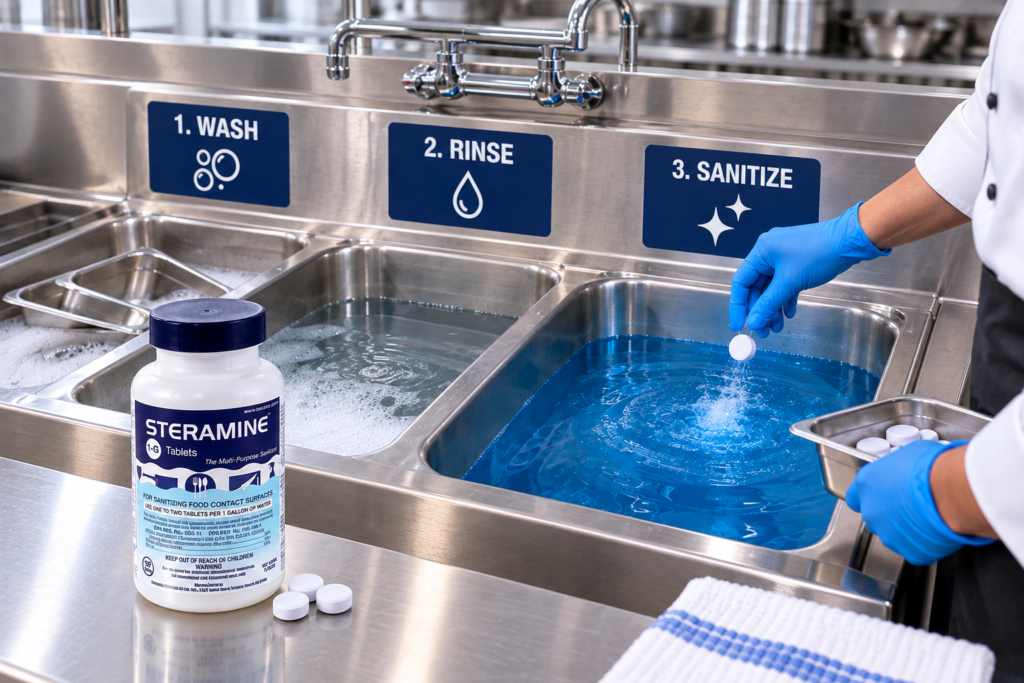
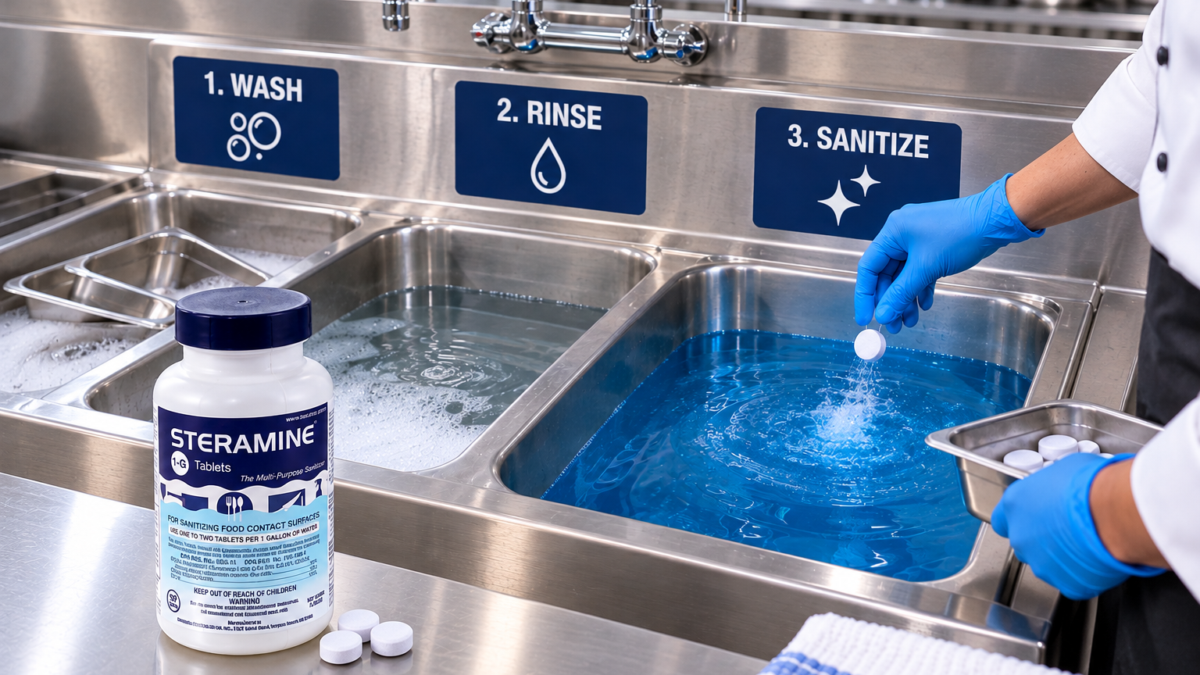
For restaurants using a three-compartment sink, employees should follow the established wash, rinse, and sanitize process.
The first compartment is used for washing, the second for rinsing, and the third for sanitizing. The sanitizing solution should be prepared according to the sanitizer’s label directions, including the required concentration and contact time.
After sanitizing, items should be allowed to air dry when required rather than being dried with a potentially contaminated towel.
Training employees on the correct sequence helps ensure that the same process is followed consistently across every shift.
Prepare Sanitizing Solutions Correctly
Using the correct sanitizer concentration is an important part of an effective sanitation routine. Too little sanitizer may not provide the intended level of sanitation, while using a product incorrectly can create other safety concerns.
Steramine Sanitizing Tablets offer a convenient way to prepare a sanitizing solution for approved applications. The tablets can be dissolved according to the product label and used for appropriate food contact surfaces, utensils, and equipment.
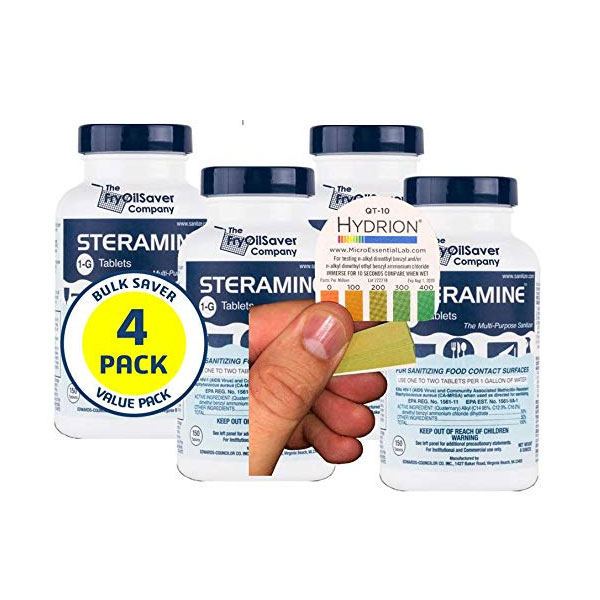
Steramine Sanitizer & QT-10 Test Strips Bundle – 4 Bottles & 30 Strips
This bundle package contains 4 bottles of Steramine Quaternary Sanitizing Tablets with 150 sanitizer tablets per bottle, and a QT-10 test kit with 30 x test strips. Steramine is an economical household and kitchen quartenary ammonium sanitizer that is used by the bar and restaurant Industry worldwide. Just 1 tablet per gallon of water makes 150 gallons of cleaning solution. Steramine is also the first sanitizing product to be developed that has been accepted and registered as being effective in killing not only infectious bacteria but HIV-1 (AIDS Virus) as well.

OR BUY DIRECT ON OUR WEBSITE:
The blue-tinted solution can also provide a visual indication that the prepared Steramine solution is present. Always follow the current product label for dilution, contact time, approved uses, and other instructions.
Include a Shift-Change Routine
Shift changes are an ideal time to reinforce sanitation standards. Before one team leaves, employees should complete assigned cleaning and sanitation tasks so the next team starts with properly maintained work areas.
A simple checklist can identify which surfaces, utensils, and equipment need attention. Managers can then review the checklist and address any missed tasks before the next shift begins.
This approach creates accountability without requiring employees to remember every sanitation task from memory.
Don’t Forget Closing Procedures
At the end of the day, the kitchen should receive a more comprehensive cleaning and sanitation routine. Food preparation surfaces, equipment, utensils, sinks, handles, and other applicable areas should be addressed according to the restaurant’s sanitation procedures.
Cleaning should remove food debris and other visible soil before sanitizing. Employees should also check areas that may be overlooked during busy service, such as equipment handles, refrigerator handles, storage containers, and corners around preparation stations.
A thorough closing routine makes the next day’s opening process easier and helps maintain consistent kitchen hygiene.
Review and Improve the Routine
Restaurant operations change over time. New equipment, menu items, employees, or changes in workflow may require adjustments to the sanitation schedule.
Managers should periodically review the routine and determine whether important surfaces or equipment are being missed. Employee feedback can also help identify areas that are difficult to maintain during busy service.
Final Thoughts
A successful restaurant sanitation routine doesn’t have to be complicated. The most important step is creating a consistent process that covers food contact surfaces, utensils, equipment, high-touch areas, and the three-compartment sink while following applicable food safety requirements.
With proper employee training, clear responsibilities, regular cleaning, and correctly prepared sanitizing solutions such as Steramine Sanitizing Tablets, restaurants can make sanitation a natural part of every shift.
A consistent routine helps create a cleaner workplace, supports food safety practices, and keeps the kitchen prepared for the next service.