
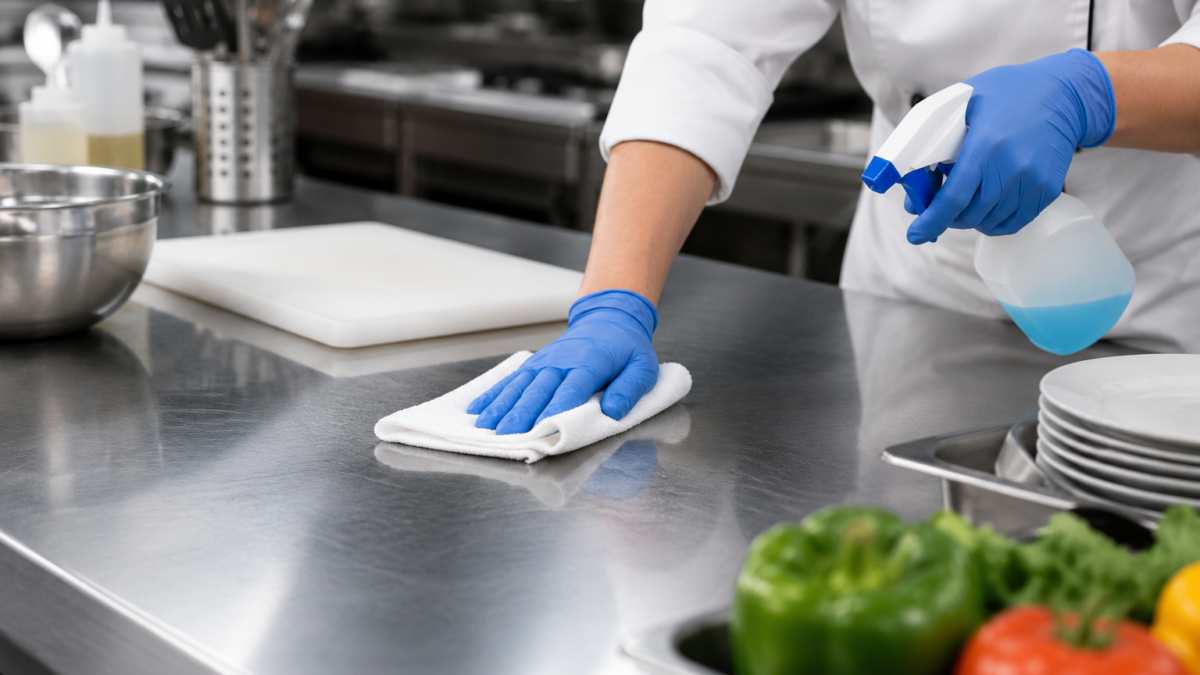
Food safety is one of the most important responsibilities in any restaurant, café, catering business, or commercial kitchen. Every day, food passes through numerous workstations, cutting boards, utensils, preparation tables, and equipment before it reaches a customer’s plate. If these food contact surfaces are not properly sanitized, harmful microorganisms can spread quickly, increasing the risk of cross-contamination and foodborne illness.
While many operators focus on cooking temperatures and food storage, surface sanitation is just as critical. A clean and well-sanitized kitchen helps protect customers, supports health department compliance, and builds confidence in your food service operation.
What Are Food Contact Surfaces?
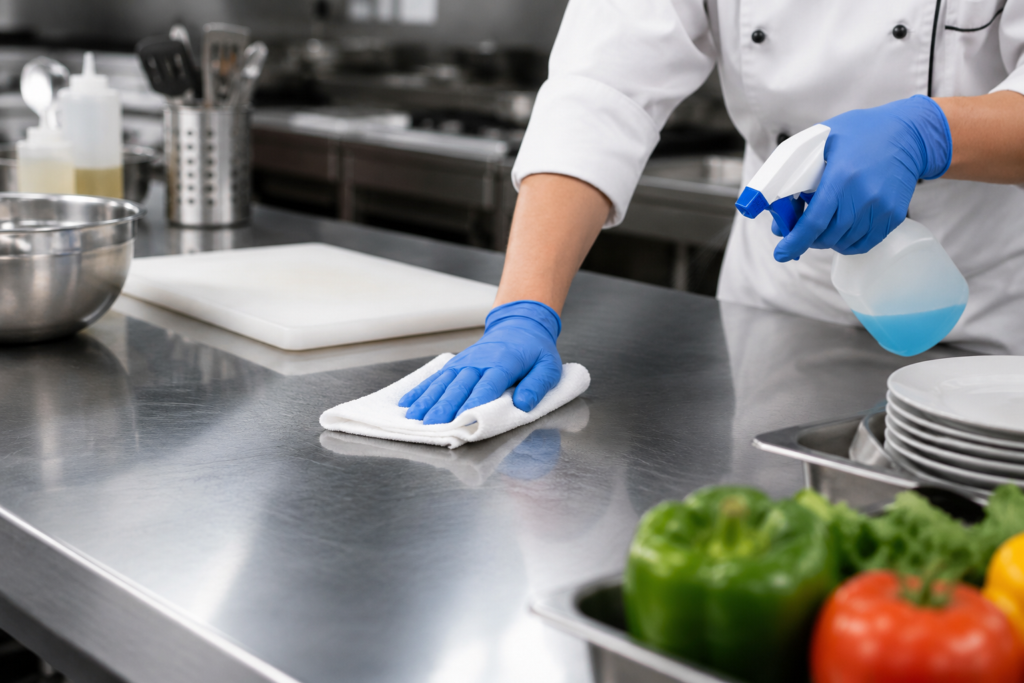
Food contact surfaces are any surfaces or equipment that directly touch food during storage, preparation, cooking, or serving. These include:
- Prep tables
- Cutting boards
- Knives and utensils
- Mixing bowls
- Pots and pans
- Dishware and glassware
- Food storage containers
- Slicers and mixers
- Beverage equipment
- Ice scoops and serving utensils
Because these surfaces come into direct contact with food, they must be cleaned and sanitized regularly to help prevent contamination.
Cleaning Alone Isn’t Enough
A common misconception is that a surface is safe simply because it looks clean. In reality, cleaning and sanitizing are two separate processes.
Cleaning removes visible dirt, grease, food particles, and residue. Sanitizing reduces harmful microorganisms that remain after cleaning to levels considered safe by public health standards.
Skipping the sanitizing step leaves surfaces vulnerable to bacteria that cannot be seen with the naked eye.
The Risks of Poor Surface Sanitation
Without proper sanitation procedures, microorganisms can easily transfer between foods, equipment, and employees. For example, using the same cutting board for raw chicken and fresh vegetables without proper cleaning and sanitizing can lead to cross-contamination.
Poor surface sanitation can result in:
- Increased risk of foodborne illness
- Cross-contamination between raw and ready-to-eat foods
- Failed health inspections
- Damage to your restaurant’s reputation
- Loss of customer trust
- Increased operational costs due to food waste and corrective actions
A consistent sanitation program helps reduce these risks while creating a safer environment for both employees and customers.
When Should Food Contact Surfaces Be Sanitized?
Sanitizing should be part of your kitchen’s daily workflow—not just something done at closing time.
Food contact surfaces should be sanitized:
- Before food preparation begins
- After handling raw meat, poultry, or seafood
- Between preparing different types of food
- After spills or contamination
- After cleaning equipment and utensils
- At regular intervals during continuous use
- At the end of each shift
Following these practices helps reduce the risk of cross-contamination throughout the day.
The Importance of Proper Sanitizer Concentration
Using a sanitizer is only effective if it is prepared at the correct concentration.
A solution that is too weak may not adequately reduce harmful microorganisms, while one that is too strong may leave unnecessary chemical residue on food contact surfaces.
For this reason, food service operators should always prepare sanitizing solutions according to the manufacturer’s instructions and verify the concentration using sanitizer test strips. Regular testing helps ensure consistent sanitation and supports health department compliance.
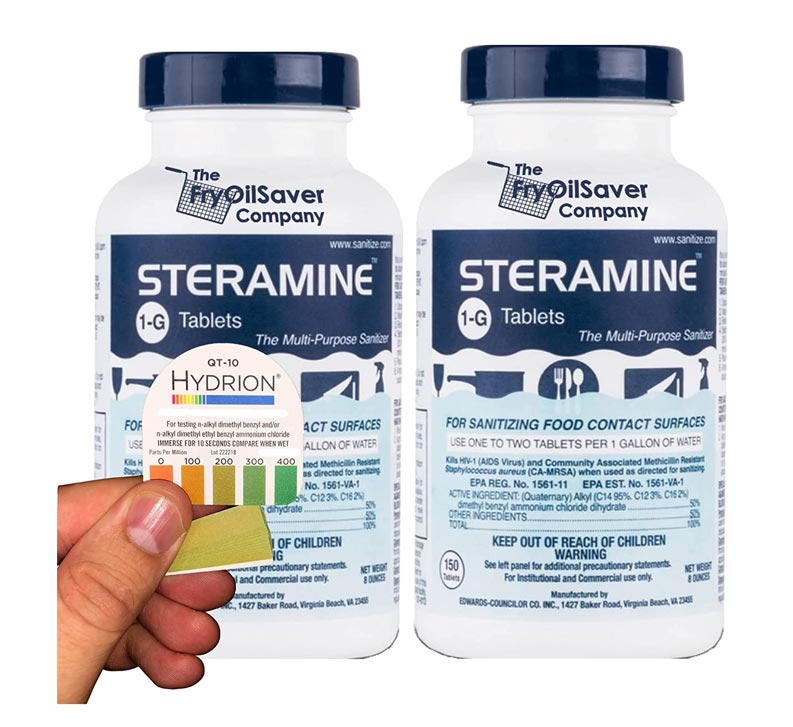
Steramine Concentrated Sanitizer Tablets with QT10 Strips – 2x 150 Count Bottle
Keep your restaurant or commercial kitchen clean, safe, and inspection-ready with this convenient sanitizing bundle. It includes two bottles of Steramine Sanitizing Tablets and 15 QT-10 test strips, giving you everything needed to prepare and verify a reliable sanitizing solution.
- 300 Steramine tablets (2 bottles × 150 tablets)
- 15 QT-10 Test Strips to verify sanitizer concentration
- One tablet makes one gallon of sanitizing solution
- Perfect for prep tables, cutting boards, utensils, dishware, food containers, and equipment
- Ideal for restaurants, cafés, bars, catering services, and commercial kitchens
Make Surface Sanitation a Daily Priority
Food safety begins long before food reaches the customer—it starts with every surface that food touches. Proper cleaning and sanitizing help reduce the risk of cross-contamination, protect customers, and create a safer working environment for your staff.
Whether you’re running a small café or a high-volume commercial kitchen, using a dependable sanitizing system is an investment in your business. Steramine Sanitizing Tablets with QT-10 Test Strips by FryOilSaver Co. make it easy to prepare the correct sanitizing solution and verify its strength, helping you maintain clean food contact surfaces with confidence every day.