
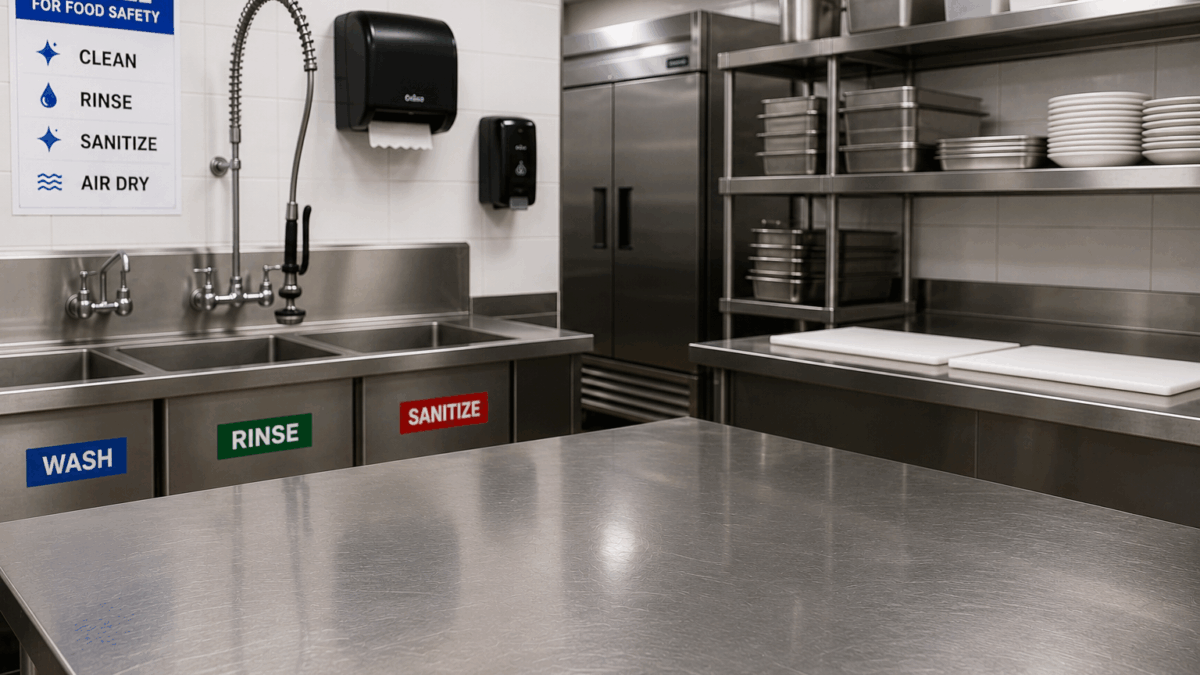
Food contact surfaces in a commercial kitchen must be cleaned and sanitized correctly to help reduce cross-contamination and support food safety. Prep tables, cutting boards, knives, utensils, slicers, beverage equipment, storage containers, and other surfaces that touch food can carry residue and microorganisms if they are not handled properly.
This guide explains how to sanitize food contact surfaces using the correct process: remove debris, wash, rinse, apply sanitizer, allow proper contact time, and air dry. It also explains why sanitizer concentration matters and why restaurants should verify sanitizer strength with the correct test strips.
Why Food Contact Surface Sanitation Matters
Food contact surfaces are any surfaces that directly touch food during preparation, cooking, serving, or storage. These include prep tables, cutting boards, knives, mixing bowls, utensils, slicers, food processors, serving trays, storage containers, and beverage equipment.
Even when these surfaces appear clean, they may still harbor harmful microorganisms that are invisible to the naked eye. Proper sanitizing reduces these microorganisms to safe levels, helping protect customers and employees while supporting compliance with food safety regulations.
Consistent sanitation also helps preserve food quality, reduces the likelihood of cross-contamination, and demonstrates a commitment to maintaining high food safety standards.
Cleaning and Sanitizing Are Different
One of the most common mistakes in food service is assuming that cleaning alone is enough.
Cleaning removes visible dirt, grease, food residue, and other contaminants from a surface. Sanitizing, on the other hand, reduces harmful microorganisms that remain after cleaning.
Sanitizing should never be performed on a dirty surface. Food particles and grease can interfere with the sanitizer’s effectiveness, preventing it from reaching microorganisms underneath. For this reason, surfaces should always be cleaned thoroughly before a sanitizing solution is applied.
Step 1: Remove Food Debris
Begin by removing all leftover food particles, grease, and visible residue from the surface. Scrape away large debris and dispose of it properly before washing.
Removing loose debris prevents it from interfering with the cleaning process and helps ensure that detergents and sanitizers can work effectively.
Step 2: Wash the Surface
Wash the surface using warm water and an appropriate detergent or commercial kitchen cleaner. Scrub thoroughly to remove grease, oils, proteins, and stubborn food residue.
Pay special attention to seams, joints, corners, handles, and textured areas where food particles can accumulate.
Step 3: Rinse Thoroughly
After washing, rinse the surface with clean water to remove detergent residue.
Soap left on the surface can reduce the effectiveness of sanitizing solutions, making this step an important part of the overall process.
Step 4: Apply the Sanitizing Solution
Once the surface has been cleaned and rinsed, apply the sanitizing solution according to the manufacturer’s directions.
Many commercial kitchens use sanitizing tablets because they make preparing a consistent sanitizing solution quick and convenient. Once mixed, the solution can be applied using spray bottles, wiping cloths, or immersion methods depending on the equipment being sanitized.
Ensure the entire food contact surface is thoroughly covered.
Step 5: Allow Proper Contact Time
Sanitizers require time to work effectively.
Do not immediately wipe the solution away after application. Allow it to remain on the surface for the contact time recommended by the manufacturer so harmful microorganisms can be properly reduced.
Rushing this step can significantly reduce the effectiveness of the sanitizing process.
Step 6: Allow the Surface to Air Dry
After sanitizing, allow the surface to air dry naturally unless the product instructions specify otherwise.
Using towels to dry sanitized surfaces can reintroduce bacteria and undo the sanitizing process. Air drying helps maintain the effectiveness of the sanitation procedure.
Don’t Forget High-Touch Equipment
Sanitizing isn’t limited to prep tables. Many smaller tools and frequently handled items require regular attention throughout the day.
These include knives, tongs, spatulas, measuring cups, food thermometers, mixers, slicers, can openers, serving utensils, beverage equipment, ice scoops, and food storage containers. Any item that comes into direct contact with food should be cleaned and sanitized between uses, especially after handling raw meat, poultry, seafood, or allergens.
Monitor Sanitizer Concentration
Preparing a sanitizing solution at the correct concentration is just as important as using the sanitizer itself.
A solution that is too weak may not effectively reduce harmful microorganisms, while one that is too strong may leave unnecessary chemical residue on food contact surfaces.
Instead of relying on guesswork, commercial kitchens should verify sanitizer strength using sanitizer test strips. Regular testing helps ensure consistent sanitation and supports compliance with health department requirements.
The Importance of a Daily Sanitizing Routine
Sanitizing should be incorporated into every stage of kitchen operations, not just at the end of the day.
Food contact surfaces should be cleaned and sanitized after preparing raw foods, between different food preparation tasks, after spills or contamination, and at regular intervals during service. Establishing consistent procedures and training employees on proper sanitation practices helps reduce risks while improving overall kitchen efficiency.

Keep Your Kitchen Food Safe with Steramine
Properly sanitizing food contact surfaces is one of the most important steps in preventing cross-contamination and maintaining a safe commercial kitchen. By following the correct cleaning and sanitizing process, using the proper sanitizer concentration, and verifying your solution with test strips, you can help protect both your customers and your business.
Make daily sanitation easier with Steramine Sanitizing Tablets and QT-10 Test Strips by FryOilSaver Co. This convenient, economical solution helps food service professionals maintain clean, compliant food contact surfaces with confidence. Order your Steramine sanitizing bundle today and give your kitchen the dependable sanitation it needs every day.
Keep Food Contact Surface Sanitizing Simple
Steramine Sanitizing Tablets and QT-10 Test Strips help commercial kitchens prepare, use, and verify sanitizer solution as part of a daily food safety routine. Use the tablets according to label directions, verify concentration with the correct test strips, and train staff to follow the same process every time.