
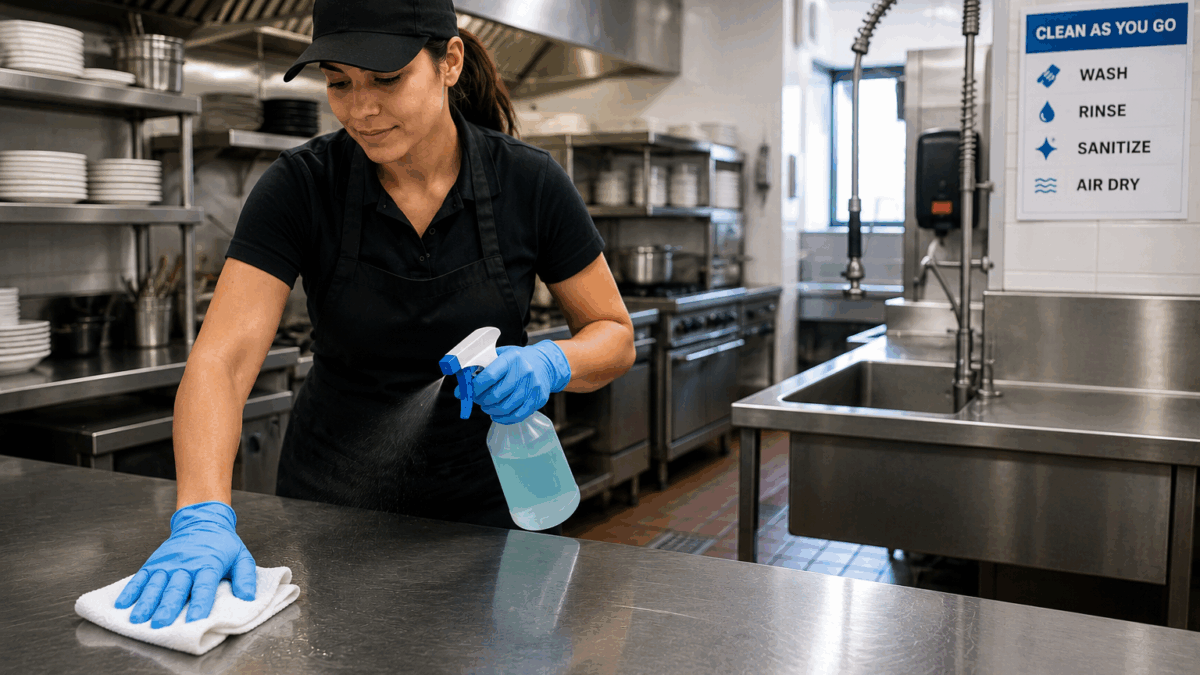
When it comes to food safety, many people use the terms cleaning and sanitizing interchangeably. While they often go hand in hand, they are not the same thing. In restaurants, commercial kitchens, cafés, bars, catering businesses, and other food service operations, understanding the difference is essential for protecting customers, maintaining health code compliance, and preventing foodborne illness.
A surface may look spotless after being wiped down, but appearances can be deceiving. Invisible bacteria, viruses, and other harmful microorganisms can remain on food contact surfaces if they are not properly sanitized.
Knowing when to clean, when to sanitize, and how to do both correctly is a fundamental part of every food safety program.
What Is Cleaning?
Cleaning is the process of removing visible dirt, grease, food particles, dust, and other debris from a surface. This is typically done using water, detergent, and physical scrubbing.
Cleaning makes surfaces look and feel clean, but it does not necessarily kill harmful microorganisms.
For example, after preparing raw chicken on a cutting board, washing the board with soap and water removes grease and food residue. However, bacteria such as Salmonella or Campylobacter may still remain on the surface.
Cleaning is always the first step because sanitizers cannot work effectively on dirty surfaces.
What Is Sanitizing?
Sanitizing is the process of reducing microorganisms on a cleaned surface to levels considered safe by public health standards.
Unlike cleaning, sanitizing is specifically designed to destroy bacteria and other harmful microorganisms that cannot be seen with the naked eye.
Sanitizing is especially important for:
- Food preparation tables
- Cutting boards
- Knives and utensils
- Pots and pans
- Dishware and glassware
- Serving trays
- Food storage containers
- Sinks used for food preparation
- Beverage equipment
- Ice scoops and bins
Without proper sanitizing, harmful bacteria can transfer from one food item to another, increasing the risk of cross-contamination.
Cleaning Comes First—Always
One of the biggest mistakes in food service is attempting to sanitize a dirty surface.
Food residue, grease, and oils create a barrier that prevents sanitizers from reaching microorganisms underneath. Even the most effective sanitizer cannot perform properly if a surface has not been cleaned first.
The proper sequence is:
- Remove food debris.
- Wash with detergent and water.
- Rinse thoroughly.
- Apply the sanitizing solution.
- Allow the required contact time.
- Let the surface air dry unless otherwise directed by the sanitizer instructions.
Skipping any of these steps reduces the effectiveness of the sanitizing process.
Why Sanitizing Matters in Restaurants
Restaurants prepare hundreds or even thousands of meals each day. Throughout service, food contact surfaces are exposed to raw meat, seafood, dairy products, vegetables, allergens, and ready-to-eat foods.
Without regular sanitizing, microorganisms can quickly spread throughout the kitchen.
Proper sanitizing does much more than satisfy health inspection requirements. It helps reduce the risk of foodborne illness, minimizes cross-contamination between foods, protects both customers and employees, and supports consistent food quality. Regular sanitizing also demonstrates a commitment to food safety and helps businesses comply with health department regulations and HACCP programs.
Routine sanitizing is one of the simplest and most effective ways to create a safer food service environment.
Common Food Contact Surfaces That Require Sanitizing
Many kitchen workers focus on large equipment while overlooking smaller, frequently touched items.
Food contact surfaces that should be sanitized regularly include:
- Prep tables
- Slicers
- Mixers
- Can openers
- Knives
- Tongs
- Spatulas
- Measuring cups
- Ladles
- Cutting boards
- Dishware
- Glassware
- Food storage bins
- Ice scoops
- Coffee equipment
- Beverage dispensers
These surfaces should be cleaned and sanitized throughout the day, especially after handling raw foods.
Don’t Guess Your Sanitizer Strength
A sanitizer is only effective when mixed at the proper concentration.
If the solution is too weak, it may not effectively reduce harmful microorganisms.
If it is too strong, it can leave unwanted chemical residue on food contact surfaces and may not comply with food safety guidelines.
This is why many commercial kitchens use sanitizer test strips to verify that their sanitizing solution is within the recommended concentration range.
Regular testing helps ensure consistency and provides confidence that sanitizing procedures are working as intended.

Best Practices for Food Service Sanitation
Creating a clean and sanitary kitchen requires more than occasional deep cleaning. Consistency is key.
Successful food service operations should:
- Train employees on proper cleaning and sanitizing procedures.
- Replace sanitizing solutions as recommended.
- Test sanitizer concentration regularly.
- Clean and sanitize food contact surfaces between tasks.
- Use separate equipment for raw and ready-to-eat foods whenever possible.
- Follow manufacturer instructions for sanitizer preparation and contact time.
- Keep sanitizing supplies readily available throughout the kitchen.
Small daily habits can significantly reduce the risk of contamination while helping maintain a safe and efficient operation.
Achieve 100% Clean with Steramine
Maintaining a safe food service operation starts with understanding that cleaning and sanitizing are two separate—but equally essential—steps. Cleaning removes dirt, grease, and food residue, while sanitizing helps reduce harmful microorganisms on food contact surfaces to safe levels. Together, they form the foundation of an effective food safety program.
With Steramine, achieving consistent sanitation is simple and reliable. The easy-to-use tablets create a dependable sanitizing solution in minutes, while the included test strips help verify that the solution is at the proper concentration for effective use. Whether you’re operating a restaurant, café, bar, catering business, or commercial kitchen, Steramine helps support daily sanitation routines and health code compliance.
Don’t leave food safety to chance. Equip your kitchen with a trusted sanitizing solution that makes maintaining clean, compliant food contact surfaces easier every day.